Top AI content tools for marketing teams have become essential software for any organization serious about scaling its content output. Whether you're a solo content creator or part of a 20-person marketing department, the right AI tools can transform how you plan, write, distribute, and repurpose content across channels.
The stakes are real: teams that adopt AI-powered content workflows are producing more material in less time, with better consistency and fewer bottlenecks. But the sheer number of options available makes it hard to know where to start.
This guide walks you through a practical, step-by-step process for identifying, evaluating, and implementing the best AI content tools for your specific marketing needs. By the end, you'll have a clear framework for building an AI-powered content workflow that actually works. If you're exploring how these tools fit into a broader strategy, our guide to content marketing automation provides the foundational context you need.
Key Takeaways
- Map your content workflow gaps before choosing any AI tool to avoid wasted subscriptions.
- The best AI content tools handle generation, optimization, repurposing, and distribution together.
- Free trials are essential; never commit annually without testing a tool for two weeks.
- Content repurposing tools can multiply one blog post into eight or more content pieces.
- Integration with your existing marketing stack matters more than flashy standalone features.
Step 1: Audit Your Content Workflow and Identify Gaps
Before you spend a dollar on any AI tool, you need a clear picture of where your content workflow actually breaks down. Start by documenting every step in your current process, from ideation through publication and promotion. Most teams discover that their biggest time sinks aren't where they expected. Writing might feel slow, but the real bottleneck could be approvals, formatting for multiple platforms, or the research phase that precedes drafting.
Gather data from your team over a two-week period. Ask each person to log how many hours they spend on ideation, research, writing, editing, design, scheduling, and reporting. You'll likely find that 30% to 40% of total content time goes to non-writing tasks like reformatting, uploading, and coordinating between team members. These repetitive tasks are where marketing automation tools deliver the fastest return on investment.
Common Bottlenecks to Look For
Watch for these specific pain points: duplicate work across social media channels, slow turnaround on blog post drafts, inconsistent brand voice across writers, and manual SEO optimization. Each of these problems has a corresponding AI solution. For instance, if your team manually rewrites blog content for LinkedIn, Twitter, and email newsletters, a content repurposing tool can handle that transformation in seconds rather than hours.
Once you've mapped your bottlenecks, rank them by impact. A useful framework is to multiply the hours wasted per week by the number of team members affected. This gives you a prioritized list that directly informs which category of AI tool to evaluate first. Don't try to solve everything at once; pick the top two or three gaps and focus there.
Create a simple spreadsheet with columns for task name, weekly hours, team members involved, and frustration level (1 to 5) to prioritize your workflow gaps.
Step 2: Evaluate the Top AI Content Tools for Marketing Teams
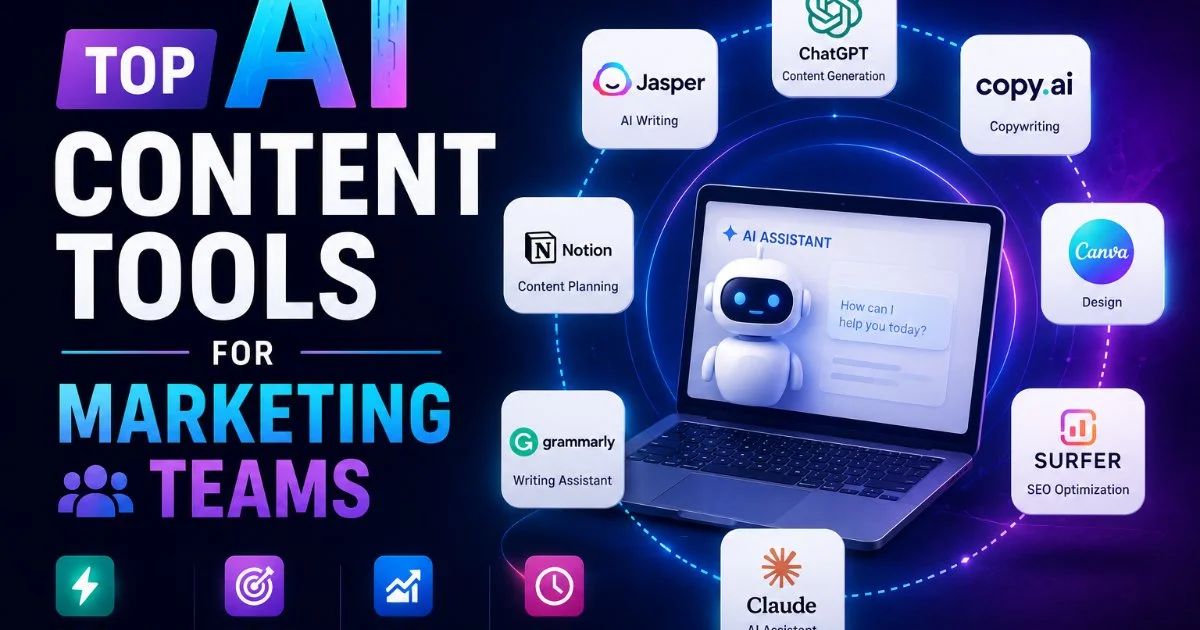
With your workflow gaps identified, you can now evaluate tools against your actual needs rather than marketing hype. The top AI content tools for marketing teams fall into distinct categories: writing assistants, SEO optimizers, content repurposing platforms, social media schedulers, and all-in-one automation suites. The best approach is to pick one strong tool per category rather than relying on a single platform that does everything poorly.
For writing and generation, tools like Jasper, Copy.ai, and ChatGPT (via the API or Plus plan) each serve different use cases. Jasper excels at long-form marketing content with brand voice controls. Copy.ai is strong for short-form sales copy and ad variations. ChatGPT offers the most flexibility but requires more prompt engineering skill. For a detailed breakdown of the latest generation tools, this roundup of top AI agents for content creation covers the current landscape well.
"The best AI tool isn't the most powerful one; it's the one your team will actually use every day."
Tool Comparison at a Glance
| Tool | Best For | Starting Price | Key Strength | Limitation |
|---|---|---|---|---|
| Jasper | Long-form blog content | $49/month | Brand voice consistency | Expensive for small teams |
| Copy.ai | Ad copy and social posts | Free tier available | Fast short-form output | Less control over long content |
| SurferSEO | SEO content optimization | $89/month | Real-time SERP analysis | Writing suggestions can feel rigid |
| Repurpose.io | Video/audio repurposing | $25/month | Automated cross-posting | Limited text content support |
| ContentAutomation.dev | Full workflow automation | Varies | End-to-end content pipeline | Requires initial setup investment |
Don't overlook SEO optimization tools like SurferSEO or Clearscope. These analyze top-ranking pages for your target keywords and give you a content brief with recommended terms, word count, and structure. When paired with an AI writer, they significantly improve your chances of ranking. Teams that combine AI writing with AI-driven SEO optimization report up to 65% faster time to first-page rankings compared to manual workflows alone.
Evaluate each tool on five criteria: output quality, ease of adoption, integration options, pricing at your team size, and customer support responsiveness. Run a structured two-week trial where at least two team members use the tool on real projects. Theoretical evaluations rarely predict how well a tool performs under actual production pressure.
Many AI tools offer annual discounts of 20% to 40%, but always complete a full monthly trial before committing to a yearly plan.
Step 3: Build Your AI Content Stack and Connect the Pieces
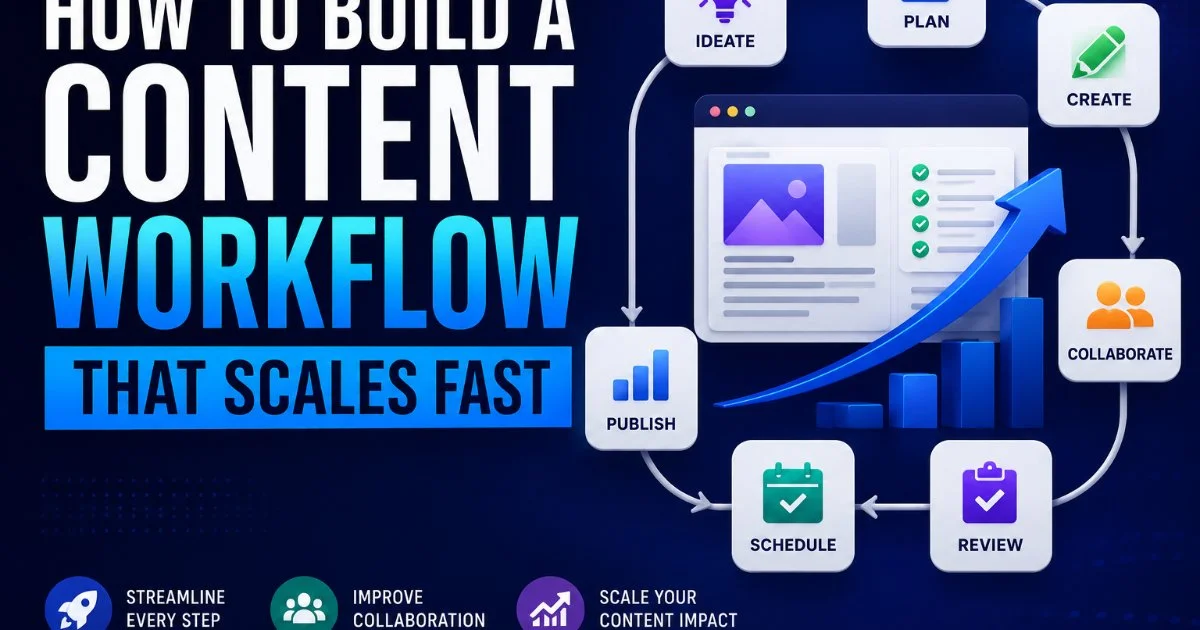
Selecting individual tools is only half the work. The real power of top AI content tools for marketing teams emerges when they're connected into a cohesive content workflow. Think of your AI stack as a pipeline: content enters at ideation, moves through creation and optimization, then flows out to multiple distribution channels. Each tool should hand off cleanly to the next without requiring manual copy-pasting or reformatting.
Start with your content management system as the hub. WordPress, Webflow, or whatever you publish through should connect to your AI writing tool (for drafts), your SEO tool (for optimization checks), and your social scheduler (for distribution). Platforms like Zapier and Make.com can bridge tools that don't offer native integrations. For example, you can set up an automation that triggers a social media repurposing workflow every time a new blog post goes live.
Integration Priorities
Prioritize these three integrations first: your AI writer to your CMS (so drafts flow directly into your publishing queue), your CMS to your social scheduler (so published posts automatically generate social promotions), and your analytics platform to your planning tool (so performance data informs future content decisions). These three connections eliminate the most manual handoff work for most marketing teams.
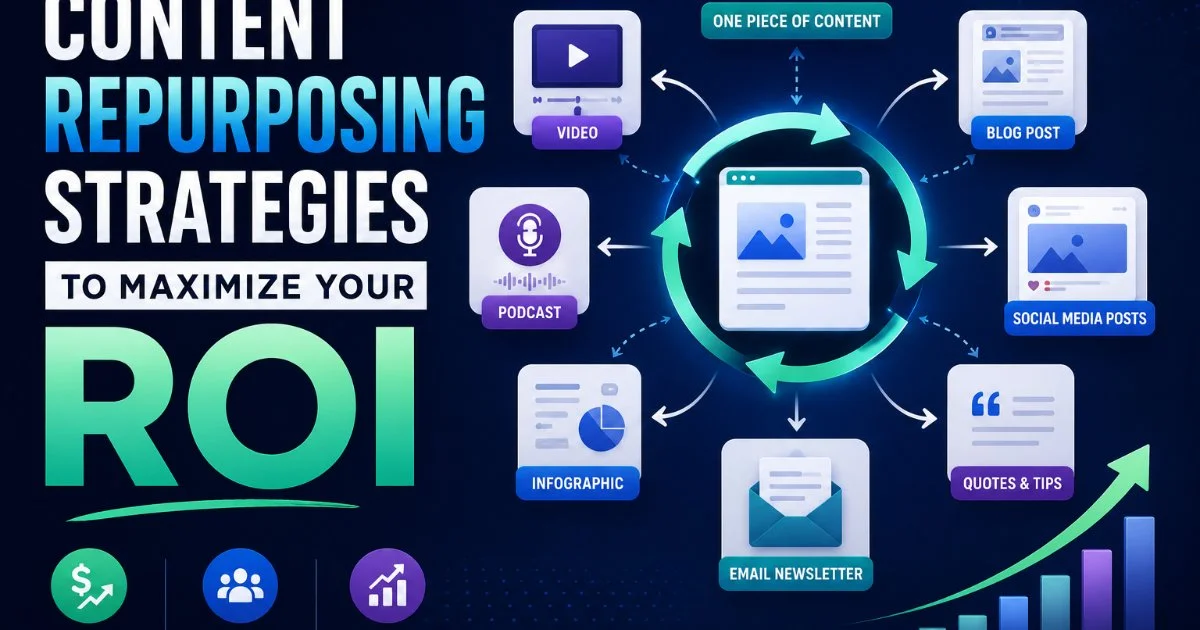
Content repurposing deserves special attention in your stack. A single 1,500-word blog post can become a LinkedIn article, five social media posts, an email newsletter section, a short video script, and a podcast talking-points outline. AI repurposing tools like Lately or custom GPT workflows handle this transformation automatically once configured. The key is setting up templates that match your brand voice and platform-specific formatting requirements from the start.
Create a "content multiplication matrix" listing every output format you need from each blog post, then configure your repurposing tool to generate all of them automatically.
Step 4: Implement, Test, and Optimize Your AI Workflow
Rolling out your new AI content stack should follow a phased approach rather than a big-bang launch. In week one, introduce the AI writing tool to your most tech-comfortable team member and have them produce three to five pieces of content. Document every friction point, unexpected output, and workaround needed. This creates a practical playbook for the rest of the team that no vendor documentation can match.
In weeks two and three, expand to the full content team while simultaneously activating your integration automations. Expect a temporary productivity dip as people learn new workflows. This is normal. The top AI content tools for marketing teams typically show measurable time savings by week four, with most teams reporting 25% to 50% reduction in content production time within the first two months of consistent use.
Measuring Success
Define your success metrics before you start, not after. Useful metrics include: content pieces published per week (volume), average time from ideation to publication (velocity), organic traffic per post (quality), and team satisfaction scores collected via monthly surveys (adoption). Compare these against your pre-AI baseline. If volume increases but quality metrics drop, you need to adjust your AI prompts, editorial process, or both.
Schedule a formal review at the 30-day and 90-day marks. At 30 days, focus on adoption and usability issues. At 90 days, evaluate ROI against your tool costs. Be willing to swap out underperforming tools; loyalty to a platform that doesn't fit your team's needs wastes both money and momentum. The AI tools landscape evolves rapidly, and what's best today may be surpassed in six months.
Don't skip the human editorial review step. AI-generated content still requires fact-checking, brand voice alignment, and quality control before publication.

Frequently Asked Questions
?How do I log my team's content workflow gaps in two weeks?
?Are content repurposing tools better than all-in-one AI writing tools?
?Is committing to an annual AI tool plan worth the cost savings?
?Can AI tools maintain consistent brand voice across multiple writers?
Final Thoughts
Finding the top AI content tools for marketing teams isn't about chasing the newest product or the biggest feature list. It's about matching specific tools to specific workflow problems, then connecting them into a system that runs with minimal friction.
Start with an honest audit, test rigorously before committing, and measure everything against your baseline. The teams that win with AI content tools are the ones that treat implementation as an ongoing optimization process, not a one-time purchase decision.
Disclaimer: Portions of this content may have been generated using AI tools to enhance clarity and brevity. While reviewed by a human, independent verification is encouraged.