Content marketing automation is the use of software and AI-powered systems to plan, create, repurpose, distribute, and organize marketing content across multiple channels with minimal manual intervention. If you've ever felt buried under a mountain of blog drafts, social posts, email sequences, and ad copy, you already understand the problem this technology solves.
The modern marketer is expected to publish consistently across five or more platforms, each with its own format, tone, and audience expectations. That workload is unsustainable without systems that handle repetitive tasks. Content marketing automation doesn't replace human creativity; it amplifies it by removing bottlenecks in production and distribution.
For digital marketers and content creators, understanding this concept is no longer optional. It's the operational backbone of any scalable content program. The stakes are straightforward: teams that automate intelligently publish more, maintain quality, and free up time for strategy.
Key Takeaways
- Content marketing automation handles planning, creation, repurposing, and distribution across channels systematically.
- AI content generation can produce first drafts in minutes, not hours or days.
- Content repurposing tools transform one asset into multiple formats for different platforms.
- Email marketing workflows triggered by behavior outperform batch-and-blast campaigns significantly.
- Automation works best when humans set strategy and machines handle execution at scale.
What Is Content Marketing Automation and How Does It Work?
The Core Workflow
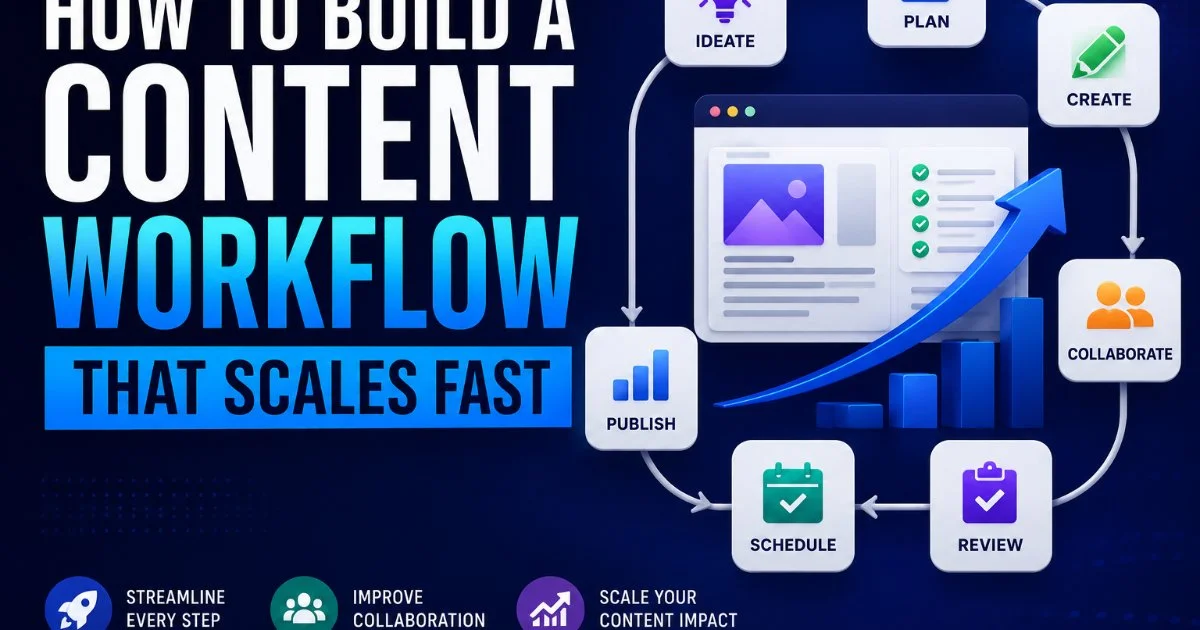
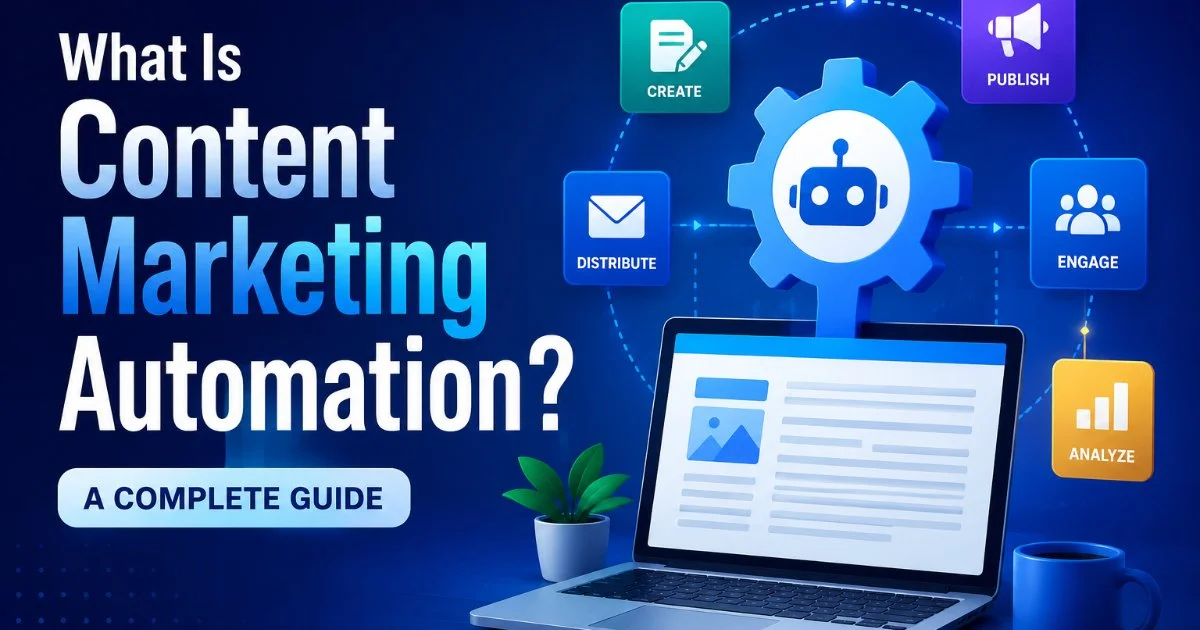
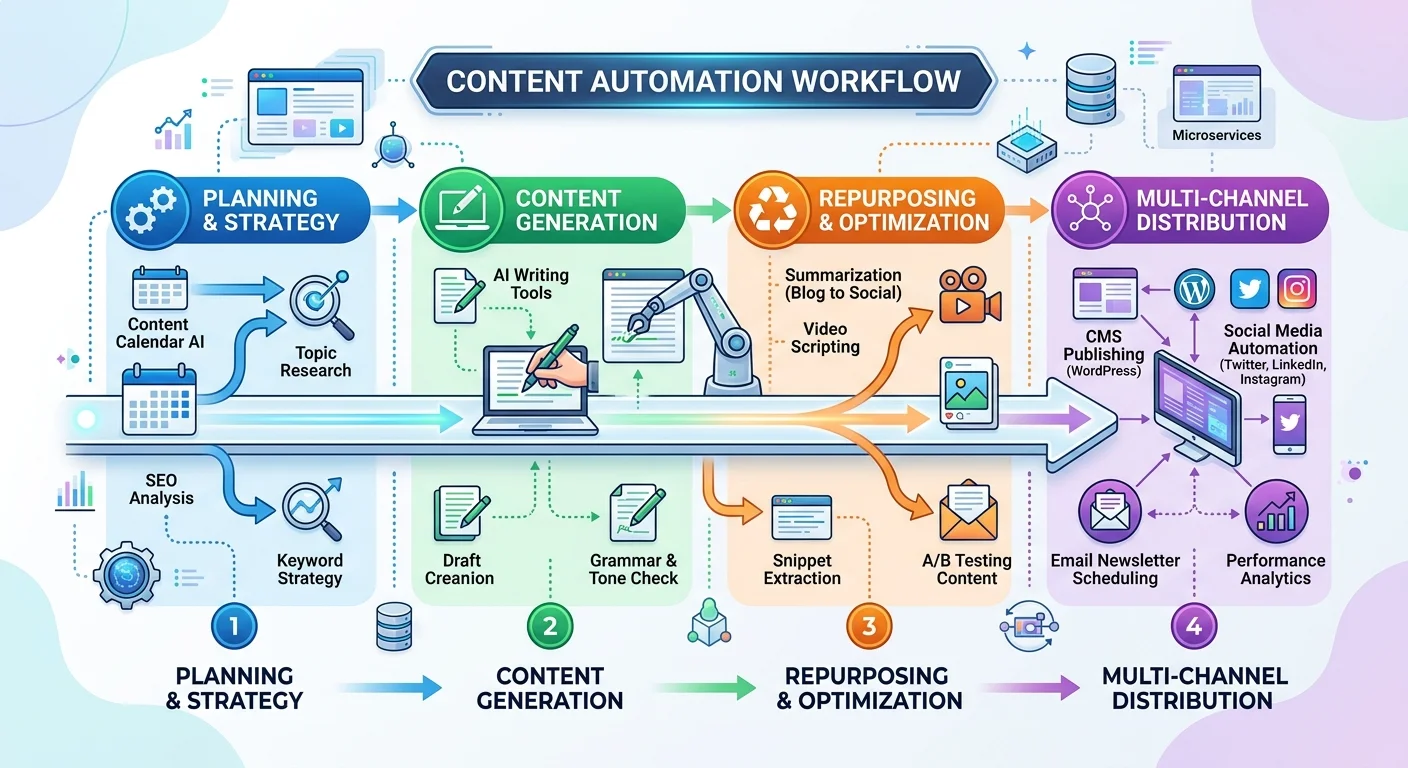
At its simplest, content marketing automation connects the stages of a content lifecycle into a single, coordinated system. You start with planning: identifying topics, mapping them to audience segments, and scheduling publication dates. The system then assists with generation, pulling from templates, brand guidelines, or AI models to produce drafts. Finally, it handles distribution, pushing finished content to blogs, social channels, email platforms, and ad networks on a predetermined schedule.
Think of it as an assembly line for content. Each station performs a specific function. A topic research tool feeds into an editorial calendar, which triggers a draft generator, which routes output to an editor's queue, which publishes approved pieces automatically. The value isn't in any single step; it's in the connections between them. When those handoffs happen without someone manually copying text between tabs, you save hours every week.
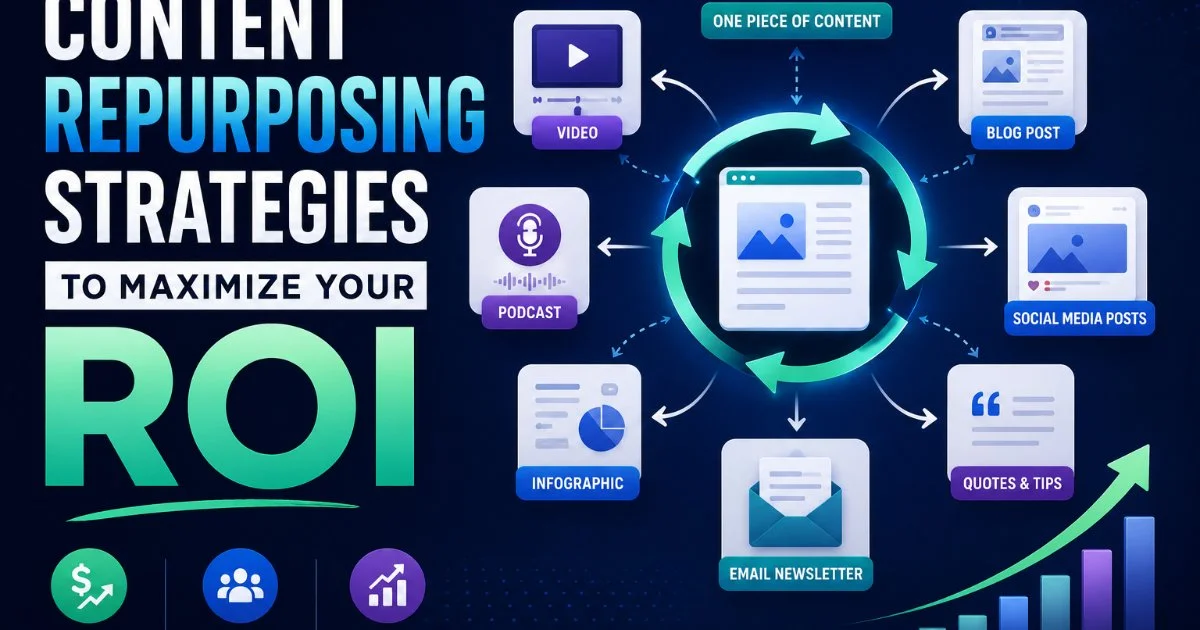
Most platforms in this space integrate with popular CMS tools like WordPress, email providers like Mailchimp or HubSpot, and social schedulers. The result is a hub where one piece of content can be created once and adapted for every channel without starting from scratch. This is where content repurposing tools become particularly powerful, transforming a long-form blog post into a LinkedIn carousel, an email newsletter, and a series of tweets.
Start by automating your most repetitive task first, such as social media scheduling, then expand to drafting and repurposing.
Where AI Fits In
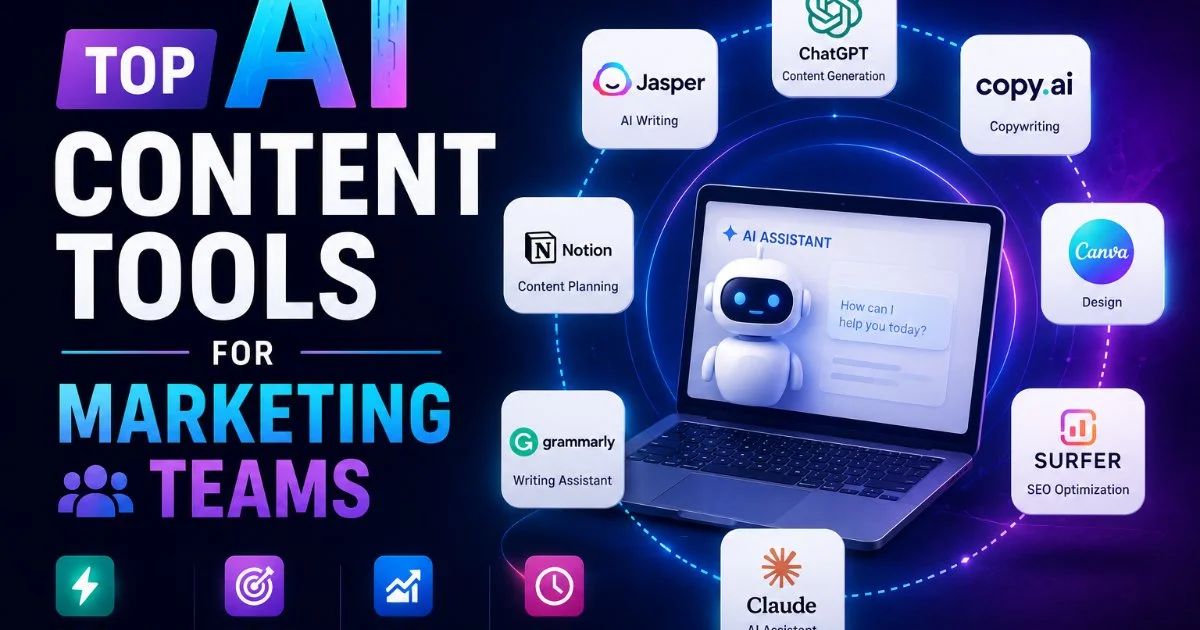
AI content generation is the engine inside many modern automation platforms. Large language models can produce blog outlines, social captions, email subject lines, and ad copy based on a prompt and context. The quality varies depending on the model and how well you direct it. Choosing the best LLM for marketing tasks matters because different models excel at different content types, from persuasive ad copy to informational blog posts.
AI doesn't operate in a vacuum, though. The best implementations use human-created brand voice guidelines, approved messaging frameworks, and performance data from past campaigns to shape AI output. Without those guardrails, you get generic content that sounds like everyone else's. The automation handles volume; the marketer provides direction and quality control. That division of labor is what makes the whole system work at scale.
Why It Matters: Use Cases Across Channels
Blogs and SEO
A solid blog content strategy requires consistent publishing, keyword research, internal linking, and ongoing optimization. That's a lot of moving parts for a small team. Automation platforms can identify keyword opportunities, generate draft outlines, suggest internal links, and schedule posts weeks in advance. Some systems even monitor published content and flag posts that need updating based on declining search rankings or outdated information.
Consider a SaaS company publishing four blog posts per week. Without automation, that requires a full-time writer, an editor, and an SEO specialist coordinating manually. With a content marketing automation setup, the AI generates first drafts from approved outlines, the editor refines them in a centralized dashboard, and the system publishes on schedule while distributing excerpts to social media. The team's output doubles without doubling headcount.
Social Media and Email
Social media content planning is notoriously time-consuming because each platform demands different formats, character limits, and posting cadences. Automation tools let you create a single content brief and produce platform-specific variations automatically. A 1,200-word blog post becomes a Twitter thread, an Instagram caption, a LinkedIn article summary, and a Facebook post, all queued and scheduled from one interface. This multi-format output is what separates true automation from simple scheduling.
Email marketing workflows add another dimension. Behavior-triggered email sequences (welcome series, cart abandonment, re-engagement campaigns) consistently outperform one-off email blasts. Automation platforms can generate email copy, set up conditional logic based on subscriber actions, and A/B test subject lines without manual intervention. When your email system and content system share data, you can personalize messages based on which blog posts a subscriber has read or which social post brought them in.
Common Misconceptions About Automation
The biggest myth is that content marketing automation means "set it and forget it." It doesn't. Automation handles execution, but strategy, brand voice, and quality oversight remain human responsibilities. If you feed an AI system poor inputs, such as vague prompts, no brand guidelines, and no editorial review process, you'll get poor outputs at scale, which is actually worse than poor outputs in small quantities. Automation amplifies whatever you put into it, good or bad.
Another misconception is that automation produces generic, robotic content. That was true five years ago. Modern AI models, when properly prompted with examples of your brand's tone and paired with human editing, produce content that readers cannot easily distinguish from fully human-written material. The key is treating AI as a drafting partner, not a replacement for editorial judgment. The editor's role shifts from writing every word to shaping, refining, and approving content at a much higher volume.
"Automation amplifies whatever you put into it, good or bad. Strategy still belongs to humans."
Some marketers worry that automation will lead to content saturation, flooding channels with mediocre material. This concern is valid only when teams prioritize quantity over relevance. A well-configured system includes quality gates: editorial reviews, brand compliance checks, performance thresholds that pause underperforming campaigns. The goal isn't to produce the most content possible; it's to produce the right content for the right audience on the right channel, faster than you could manually.
Finally, there's the belief that automation is only for enterprise teams with large budgets. In reality, many tools now offer tiered pricing that makes content marketing automation accessible to freelancers and small agencies. The ROI calculation is simple: if a tool costs $100 per month but saves you 15 hours of work, and your time is worth more than $7 per hour, it pays for itself. Most content creators clear that bar easily.
Never publish AI-generated content without human review. Factual errors, tone mismatches, and hallucinated sources can damage your brand credibility.
How It Relates to Similar Concepts
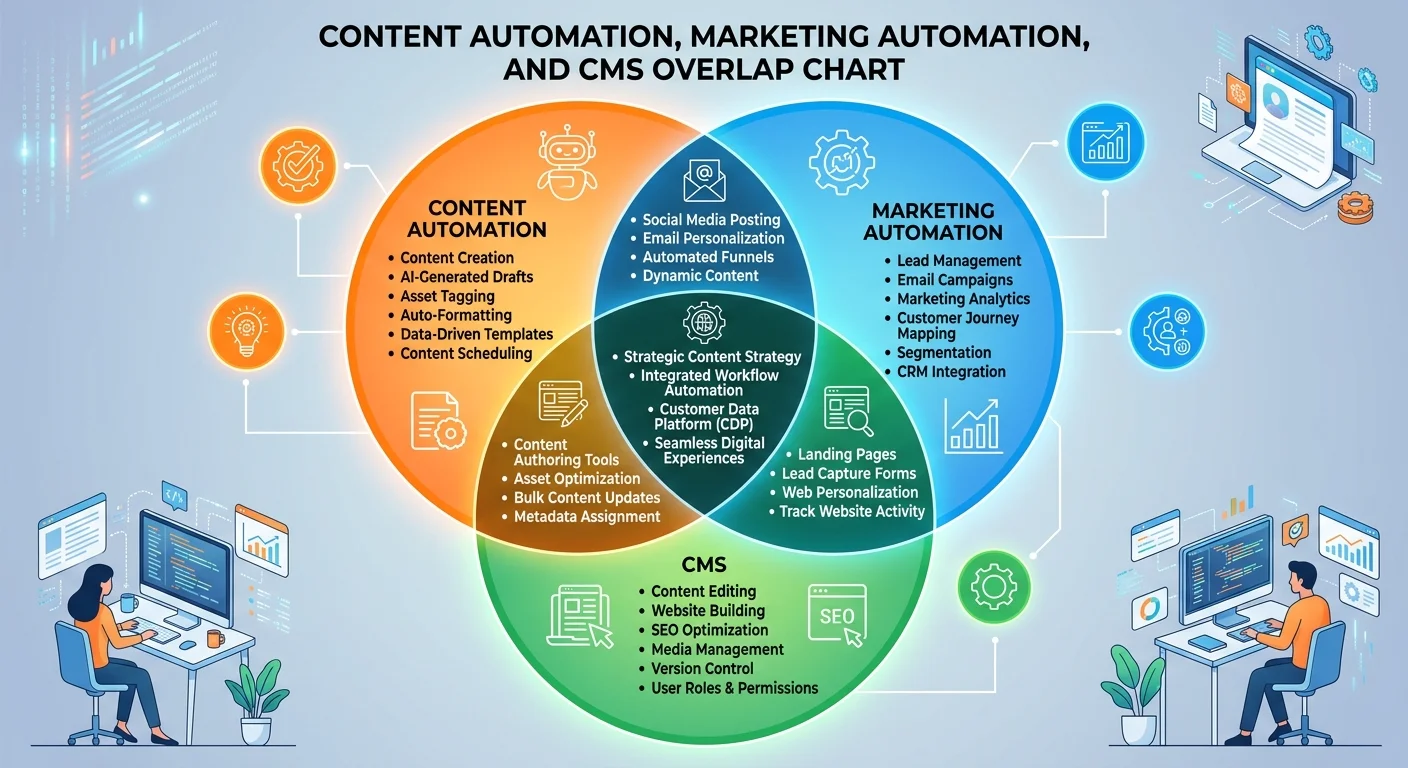
Content marketing automation is sometimes confused with marketing automation broadly, but the two aren't identical. Marketing automation platforms like HubSpot, Marketo, and ActiveCampaign focus primarily on lead management, CRM integration, and campaign orchestration. Content marketing automation is a subset that zeroes in on the production and distribution of content assets themselves. The two overlap significantly in areas like email marketing workflows and lead nurturing sequences, but content automation puts the emphasis on the creative production pipeline.
It also differs from content management systems. A CMS like WordPress stores and publishes content. A content automation system operates upstream and downstream of the CMS: upstream by generating and organizing content before publication, downstream by distributing and repurposing it afterward. Many teams use both together, with the automation platform feeding finished assets into the CMS for final publication. Understanding where each tool fits prevents you from expecting one platform to do everything.
| Feature | Content Marketing Automation | Marketing Automation (General) | CMS |
|---|---|---|---|
| Content generation | ✓ | ✗ | ✗ |
| Multi-channel repurposing | ✓ | Limited | ✗ |
| Editorial calendar | ✓ | ✗ | Plugins only |
| Lead scoring | ✗ | ✓ | ✗ |
| CRM integration | Limited | ✓ | ✗ |
| Content publishing | ✓ | Email only | ✓ |
| Behavioral triggers | Content-based | ✓ | ✗ |
Many teams use a combination of all three system types. The goal is integration, not replacement of existing tools.
Social media management tools like Buffer and Hootsuite handle scheduling and analytics but lack the content creation and repurposing capabilities of a full automation platform. Similarly, standalone AI writing tools generate text but don't manage workflows, calendars, or distribution. Content marketing automation ties these functions together into a coherent system. That integration is what transforms isolated tools into a functioning content operation capable of supporting a real blog content strategy, consistent social presence, and responsive email program simultaneously.
The space is evolving rapidly as AI capabilities improve. Platforms are starting to incorporate performance feedback loops where the system learns which content types, topics, and formats drive the best results for your specific audience, then adjusts future recommendations accordingly. This moves automation from simple task execution toward genuine content intelligence. Teams that adopt these systems now build a data advantage that compounds over time, making their content operation harder for competitors to replicate.
Frequently Asked Questions
?How do I start automating without overhauling my entire workflow?
?Does content repurposing automation actually maintain quality across formats?
?How much time does content marketing automation realistically save per week?
?Will automating content creation make my blog posts sound generic or robotic?
Final Thoughts
Content marketing automation is not a futuristic concept. It's an operational reality that thousands of teams already rely on daily. The technology handles the tedious parts of content production, from first draft to multi-channel distribution, while humans focus on strategy, creativity, and quality.
For digital marketers drowning in content demands, adopting even basic automation can reclaim hours every week. Start with one workflow, measure the results, and expand from there.
Disclaimer: Portions of this content may have been generated using AI tools to enhance clarity and brevity. While reviewed by a human, independent verification is encouraged.